
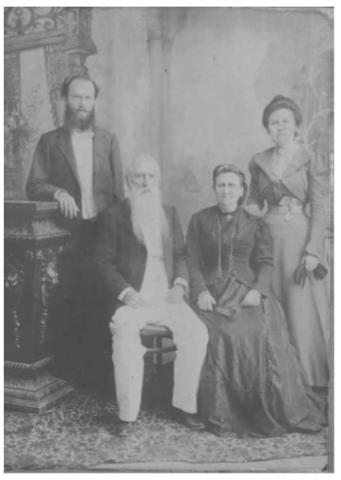
The Giuseppe Pascotini family
Gender information of the object:
Color:
Type:
Primary Material:
3D object:
Source:
Phivos Stavrides Foundation - Larnaka Archives was established following an agreement between the Phivos Stavrides' family and the Municipality of Larnaka. It started operating in March 2015 and is housed on the first floor of the former building of the Ottoman Bank in Larnaka. The Foundation is a research centre for the history and culture of Cyprus, focusing on literature, archaeology and immaterial cultural heritage. Its collection includes more than 50.000 documents, including books that date as back as 1580, rare travel books and unique publications from or pertaining to Cyprus. The ephemera and photographs collections specifically constitute valuable research sources. The Foundation organizes seminars, exhibitions and events, as well as publishes books, on history, art and crafts in collaboration with agencies such as the UNESCO National Committee, municipalities of the Larnaka district, and private museums. In this context, the Phivos Stavrides Foundation - Larnaka Archives, in addition to its research and publishing activities, designs and curates specialized museums and exhibits relating to traditional crafts of the island and their application to contemporary life. Furthermore, it organizes seminars on the learning of traditional crafts, such as the Lefkara lace, with special emphasis on their development according to contemporary aesthetics and other needs of the local society. Since 2018, the Foundation is the ambassador of the Michelangelo Foundation for creativity and craftsmanship and part of its Cultural Council.
Code:
582
Translator:
Euphrosyne Rizopoulou-Egoumenidou
Charlotte Steffen
Iosif Hadjikyriakos
Description:
The Giuseppe Pascotini family (mid-1900s). The photograph was taken in a studio. From left to right, we can distinguish: Giuseppe Pascotini the younger, Giuseppe Pascotini with a long white beard, Maria Varlaam Pascotini, and Laura Pascotini. Laura's attire, with the short bolero, reflects the trends of European fashion in the early 20th century. The dress of the older lady is dark-coloured and more conservative. Both men appear in European-style suits.
P.B.K10.15
References/Remarks:
Ε. Ριζοπούλου-Ηγουμενίδου, Π. Χατζηττοφή, Ι. Χατζηκυριάκος, Παλιές Φωτογραφίες Νέες Προσεγγίσεις: Η αστική ενδυμασία της Λάρνακας (1870-1920) μέσα από το αρχείο του Ιδρύματος Φοίβου Σταυρίδη, (Ίδρυμα Φοίβου Σταυρίδη-Αρχεία Λάρνακας, Λάρνακα 2016).